Neck Pain from Desk Work – What Happens to the Cervical Spine and When Can Chiropractic Help?

In modern workplaces, more and more people spend 6–10 hours a day in front of a computer. Desk work can put significant strain on the cervical spine, especially when posture is not optimal.
By the end of the day, many people experience:
- neck stiffness
- tension in the shoulders
- dull headaches
- pain between the shoulder blades
Over time, this tension can become persistent and the range of motion of the neck may decrease.
How Does Desk Work Affect the Cervical Spine?
The human head weighs approximately 4–6 kg (9–13 lbs). When the head moves forward relative to the torso – for example while using a laptop or looking at a phone – the load on the cervical spine increases significantly.
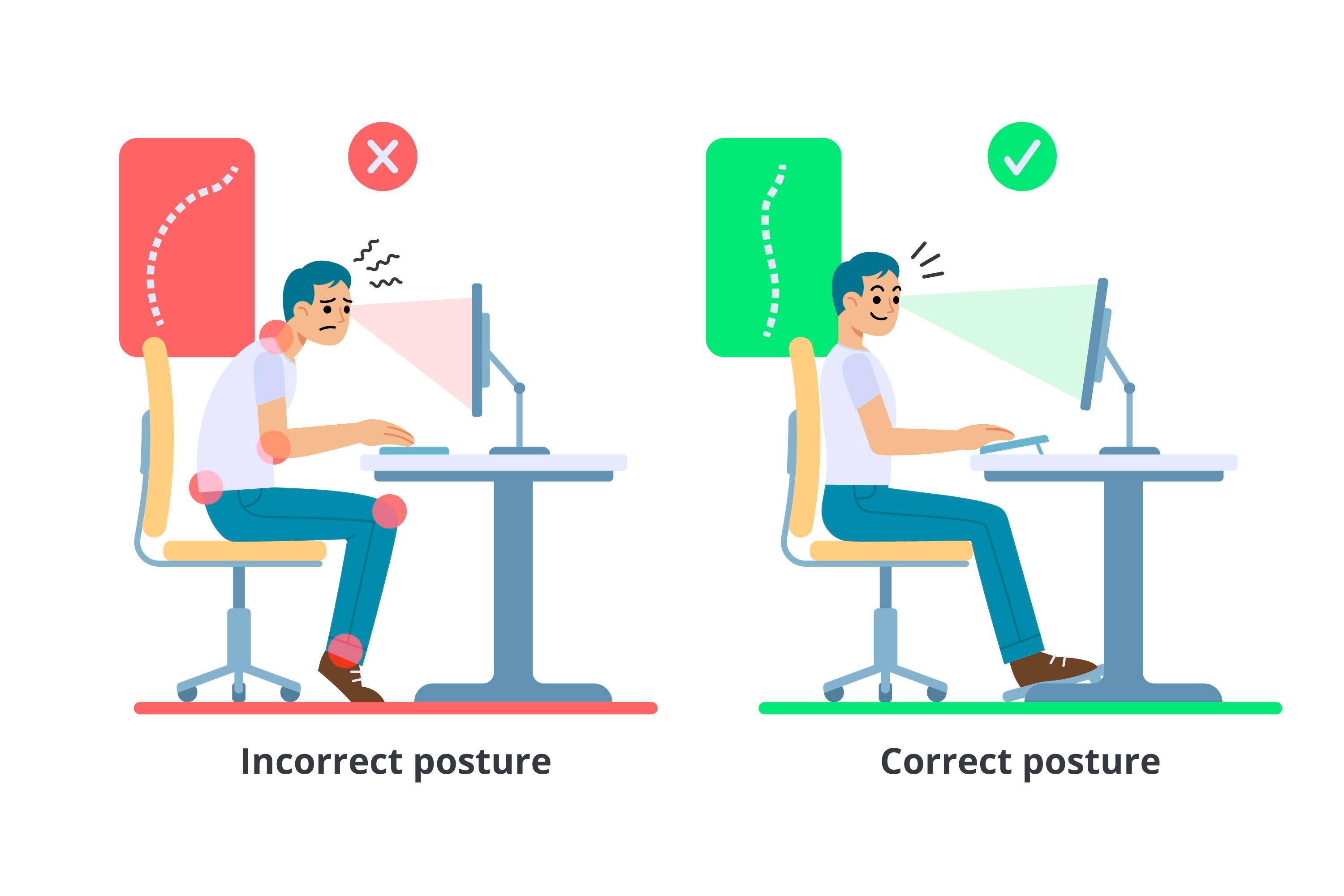
The further the head moves forward, the greater the force acting on the neck muscles and joints.
Over time this can:
- cause muscle tension
- reduce neck mobility
- overload the small spinal joints
- trigger headaches
This is one of the most common causes of so-called “office neck pain.”
What Symptoms Can Cervical Overload Cause?
Problems in the cervical spine do not always appear only in the neck.
Common symptoms include:
- pain radiating into the shoulders
- tension between the shoulder blades
- headaches around the base of the skull
- neck stiffness
- restricted movement

When Can Chiropractic Treatment Help?
The goal of chiropractic treatment is to restore spinal mobility and reduce muscular overload.
Treatment can be particularly effective if:
- neck pain improves with movement
- movement is restricted in certain directions
- pain worsens after desk work
- symptoms are mainly muscular tension
If you have never had treatment before, you may also find this article useful: https://theplacestudio.hu/en/blog/personalized-chiropractic-budapest

You can find detailed information about treatment prices here:
https://theplacestudio.hu/en/pricing
What Can You Do to Prevent Neck Pain?
Desk work itself is not necessarily harmful if the spine moves regularly throughout the day.
A few simple adjustments can help a lot:
- keep the monitor at eye level (or slightly higher)
- use an external keyboard when working on a laptop
- take short movement breaks every hour
- mobilize the shoulders and neck
- maintain an ergonomic sitting position

When Should You See a Specialist?
You should consider consulting a professional if neck pain:
- lasts for several days
- becomes recurrent or constant
- radiates into the shoulder or arm
- is accompanied by limited mobility
A proper assessment helps determine whether chiropractic treatment, massage therapy, physiotherapy (or a combination of these) is the most appropriate solution.
If you would like to understand what might be behind your symptoms, book an assessment and targeted treatment with us.