When Can Chiropractic and Massage Treatment Help?
A pinched nerve in the lower back is one of the most common causes of sudden, intense pain. In many cases, the pain is not only local but can radiate into the glutes, thigh, or even down the leg.
When Should You See a Chiropractor?
In short: when the pain is caused by joint blockage, misalignment, or restricted movement. The goal of chiropractic treatment is to restore joint mobility and relieve pressure on the affected nerve.
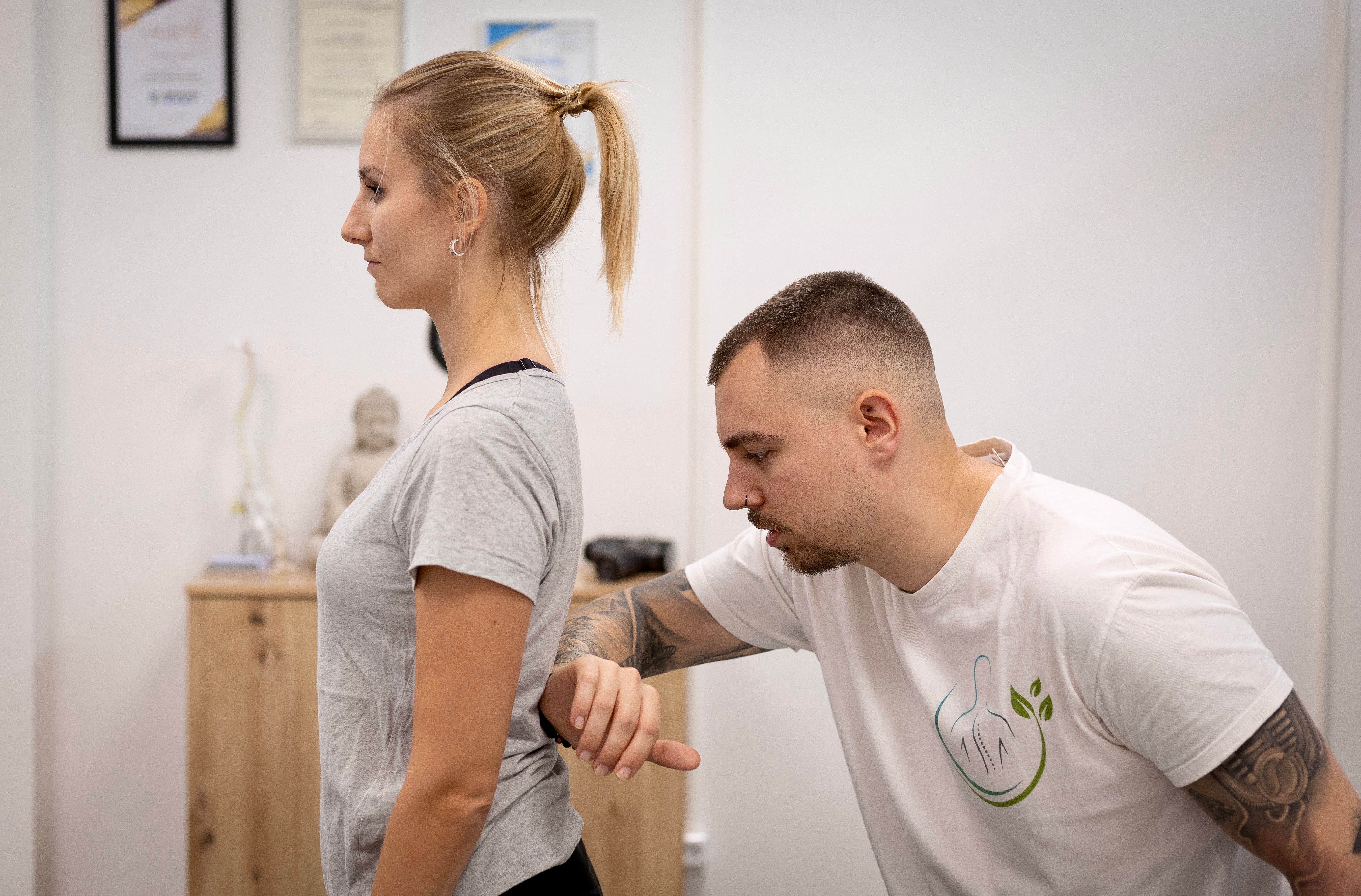
What Causes a Pinched Nerve in the Lower Back?
There can be multiple underlying causes, often appearing together:
- herniated or bulging disc
- poor posture (sedentary work, slouching)
- sudden awkward movement
- lack of physical activity
- muscle imbalance
- overuse or sports injury
Chiropractic treatment doesn’t just address the symptoms—it also helps identify the root cause, which is key for long-term improvement.
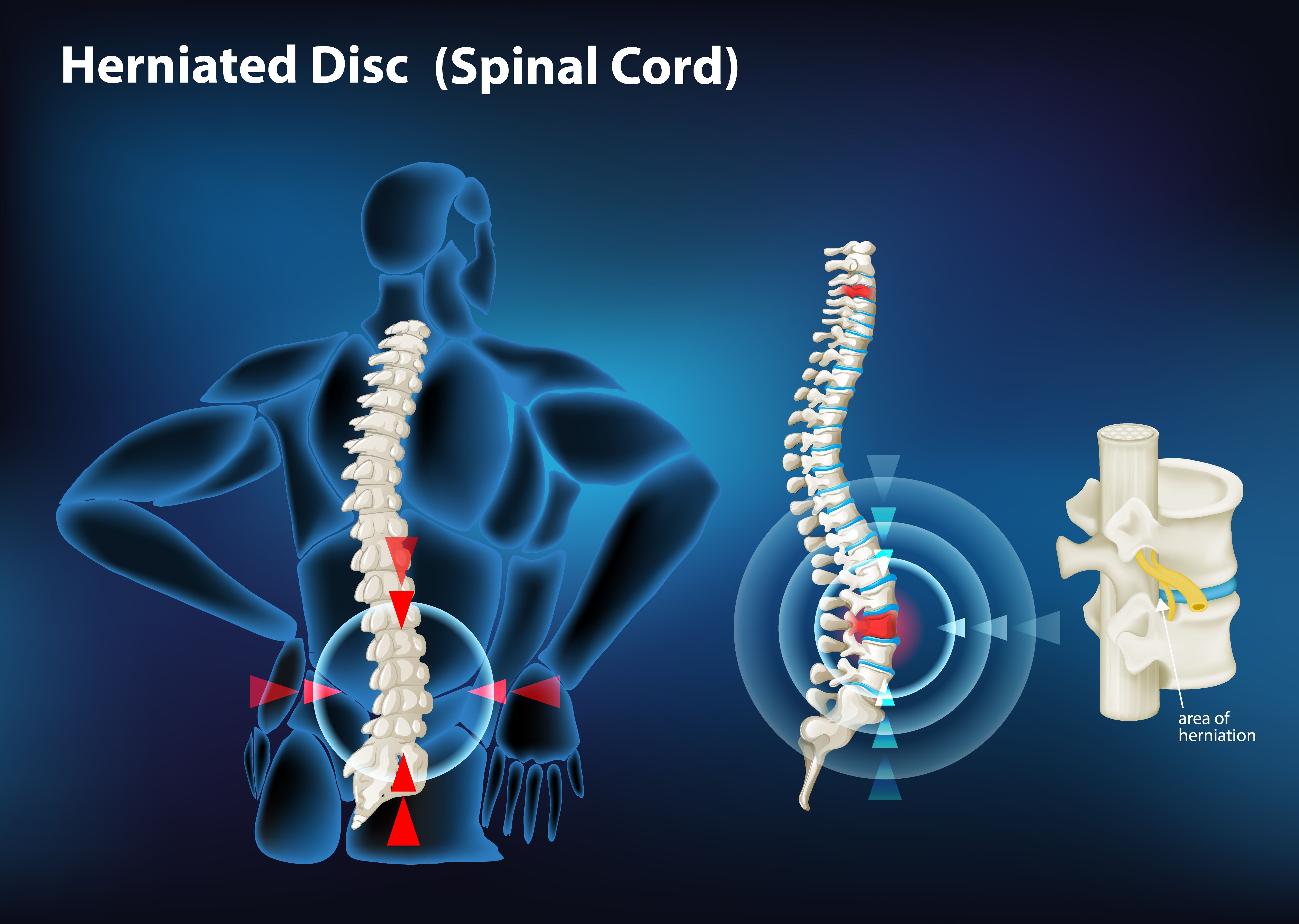
What Are the Symptoms?
The most common signs include:
- sharp, stabbing lower back pain
- pain that worsens with movement
- pain radiating down the leg
- numbness or tingling
- restricted range of motion
If you experience several of these, there is a high chance of nerve involvement.

What NOT to Do If You Have a Pinched Nerve
This is where many people make mistakes—leading to prolonged recovery.
❌ Hot baths or heat in the first few days
Although it may feel good temporarily, heat can increase inflammation and worsen the condition.

❌ Immediate massage or deep manipulation
During the first 1–2 days, inflammation is at its peak, and treatment may actually make things worse.
❌ Returning to activity too soon
Overexertion can cause muscles to tighten further, increasing pressure on the nerve.
General rule: rest for the first 2–3 days, then start targeted treatment.
Why Start with Chiropractic Treatment?
Many people go straight for a massage—but on its own, it’s often not enough.
If joint movement isn’t properly restored:
- muscles can tighten again within 1–3 days
- pain may return
- the root issue remains unresolved
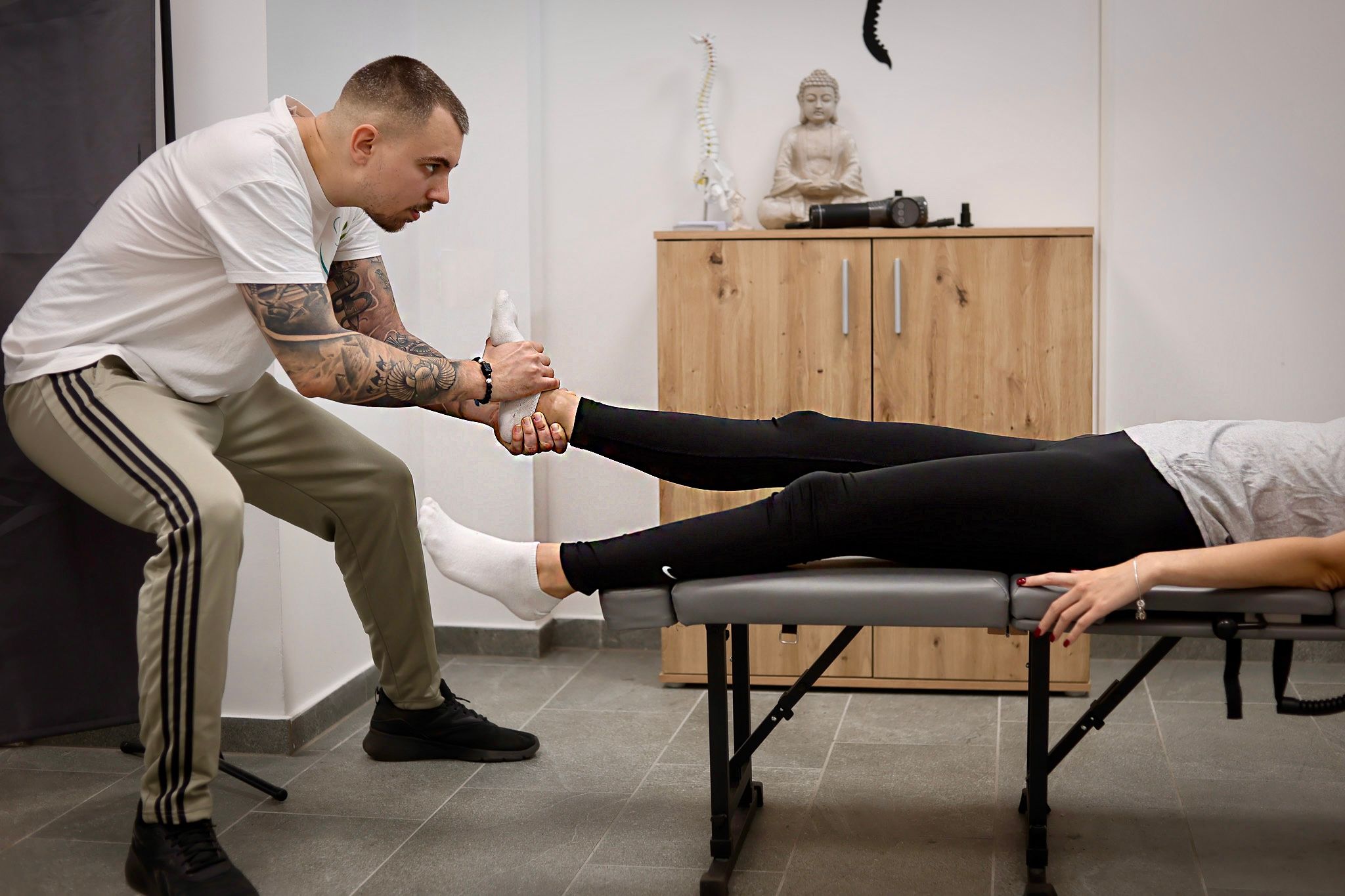
Chiropractic Treatment:
- restores joint mobility
- reduces nerve pressure
- creates a foundation for effective follow-up treatments
That’s why the correct order matters: structural correction first, then muscle treatment.
When and How Does Massage Help?
Massage is most effective when:
- acute inflammation has subsided
- joint restrictions have already been addressed
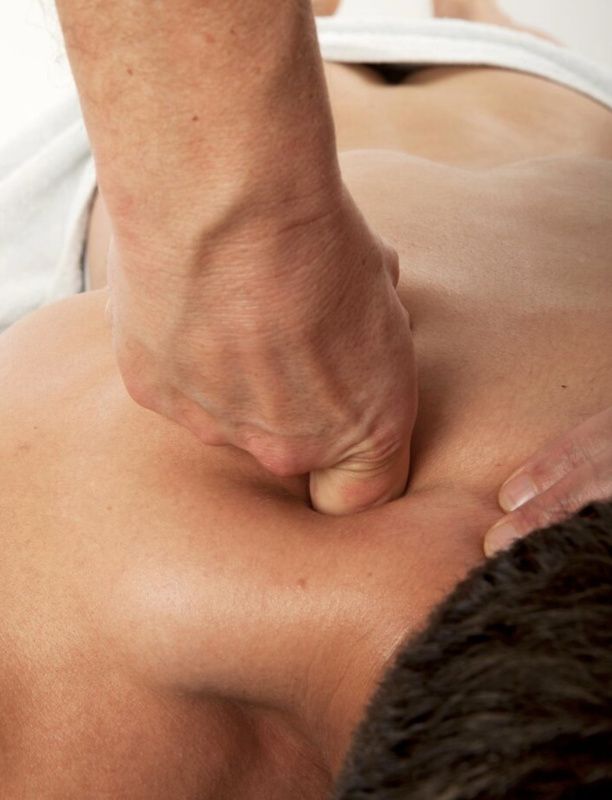
At this stage, massage:
- relaxes tight muscles
- improves circulation
- speeds up recovery
- helps prevent recurrence
The best results come from combining chiropractic care with massage therapy.
How Serious Is the Problem? Are Multiple Sessions Needed?
This varies individually, but generally:
- mild cases: 2–3 sessions
- moderate: 3–5 sessions
- chronic conditions: longer treatment process
During treatment:
- we also review and help interpret medical reports if needed
- we provide personalized advice

What’s Next?
If you’re dealing with a pinched nerve, the most important steps are:
- don’t worsen the early phase (rest, avoid heat)
- seek professional help in time
- combine treatments (chiropractic + massage)